What You Should Know Before You Hit The Road
Honest answers to the questions our friends keep asking us
August 22nd, 2026
Honest answers to the questions our friends keep asking us
August 22nd, 2026
I have had lots of people ask me about what it takes to travel in an RV full time with kids. We absolutely love this life and all the adventures it has enabled for us, but life on the road is not for the faint of heart. This article is inspired by a conversation with a friend and the questions she had about life on the road.
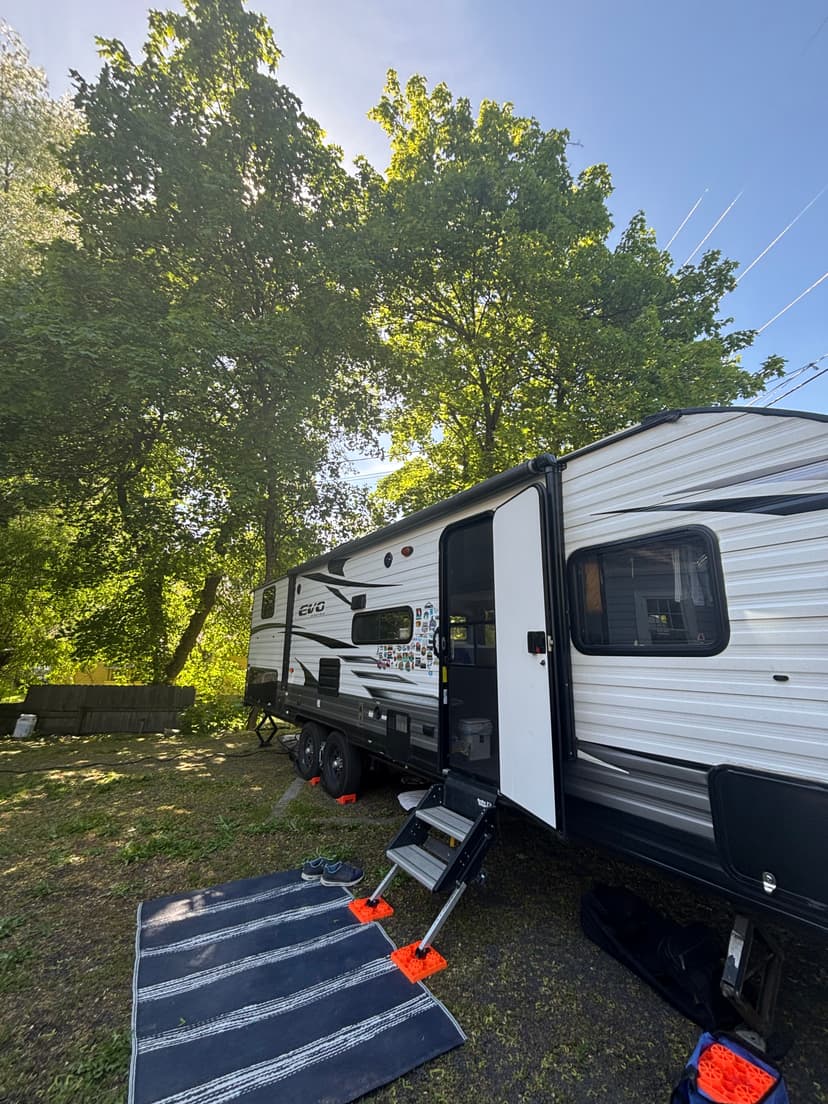
There are benefits and drawbacks of each different rig set up. We chose to tow a travel trailer with a truck with a camper shell so we can use our truck bed as our "garage." We love being able to store our mountain bikes, surfboards, camping gear, fishing gear, skis, paddleboards, etc. in our truck bed. A travel trailer and an F-250 were also less expensive options than a fifth wheel and a dually truck.
Many families we know have a fifth wheel for more space (especially families who have more kids!). Most fifth wheels require a dually truck to tow it, which has two tires on each side in the back of the truck.
Choosing a motorhome enables you to tow behind a smaller, more fuel efficient vehicle for everyday driving but also requires the maintenance of two engines (the motorhome itself and the additional vehicle).
A camper van allows maximum flexibility when it comes to where you can camp each night since you can just park it in a regular parking spot (rather than the space required for a big rig and truck) but is limited on interior space.
Life on the road can be made to be quite affordable, but it can also be very expensive depending on how you do it.
Some of the main ways we have made it affordable:
Buying a used, inexpensive truck and trailer to begin with. Our travel trailer was about 20k and our truck was about 30k. We were able to trade in our old truck so we only had to pay a difference of 7k, and we sold our camper van, which nearly covered the cost of the trailer.
It is also possible to spend hundreds of thousands of dollars on a rig, depending on what you are looking for.
One of the biggest ways we save money living on the road is with our Thousand Trails membership. We bought a lifetime membership for 10k and don't pay any nightly fees when we stay in their parks. If you are paying for nightly campgrounds, you could be spending 75–100 per night, which would add up to the cost of rent! We also love many of the locations of Thousand Trails on the west coast (we haven't traveled to any east of Arizona yet). Another big benefit of this membership is there are no cancellation fees for members. We change our bookings around all the time with no penalty. If we pay to camp somewhere else there is typically a cancellation fee if we need to change our plans.
People are always curious about how often we move. We typically stay in one place for 2–3 weeks at a time since most Thousand Trails campgrounds allow a maximum stay of 2–3 weeks (depending on campground and high use seasons). Sometimes we move more frequently, like when we are traveling between California and Oregon, or when we are paying for a campground that is outside of our membership. Then we only stay for a few days at a time to keep costs down.
We love being able to set up for several weeks at a time, settle into a routine in each location, and have time for a balance of home days and adventure days.
Another question we have had a lot of people ask is: How did your family react? Did you get any hate from family for this decision?
We were very fortunate in that our families were always supportive of our decision to travel in our RV full time with our kids. We had already been homeschooling, another decision that our families have always supported and encouraged. We are very lucky to have so much support. I know that is not always the case when people choose to live an alternative lifestyle.
One thing I always tell people who are considering living in an RV full time is that there is always maintenance! At least one of you needs to be handy or be prepared to pay someone else to be fixing things very regularly. We (ok, my husband) has replaced faucets, fittings, valves, and toilet seals, and jokes that he has become a plumber since we moved into an RV (especially when our pipes kept freezing our first winter near Sedona, AZ). We once had to climb in through our bedroom window when our front door lock/handle stopped working, and my husband had to pry it off and replace it. The tongue jack has needed to be replaced. Twice. The roof needs regular maintenance. The brakes need to be replaced. The bearings need to be greased. We often find ourselves asking "why is this wet?" and needing to quickly diagnose and fix a problem.
Another thing we love about Thousand Trails is there are a lot of full-time families who live in the parks. We have met many other families who travel full time like us and have even been able to change around our bookings to see each other at multiple parks. We met one family in Pismo Beach, CA in March and were able to camp together in Yosemite, Lake Tahoe, Mount Hood, the Oregon Coast, and western Washington since we were on similar routes and primarily staying within the Thousand Trails campgrounds.
I also have people ask if we feel safe when traveling. We almost always feel very safe and secure in our campgrounds and mostly have very kind neighbors.
People often ask if we get annoyed with each other living in such close quarters. I don't think we get any more annoyed than we did when we lived in a large home. In fact, a smaller space forces us to keep things extra tidy and minimal, which reduces annoyance (for me, at least). Of course, there are times that it feels small, which is when I usually need to go on a walk or drive to do something solo. When the kids start to annoy each other, that's my clue to take them outside and do something where they can spread out. I would say the rate of annoyance is similar to when we lived in a traditional home.
I think living in a small space would be extremely challenging if you have too much stuff and don't have a way to keep everything organized and in its place. We got rid of most of our belongings when we went on the road and continue to go through our belongings in the trailer every few months, reorganizing and purging things we no longer need. If you're thinking about this life, consider minimizing your belongings as much as possible.
Also, we started living in our RV when our kids were 6 and 8. I think the limited space would be difficult with babies and toddlers.
So far, our kids have absolutely loved it. They love traveling and exploring new places. They are happy to have a smaller home and fewer toys since they know they also get more time with their parents and traveling. We're lucky that our sons are best friends, so they essentially each got to bring their best friend with them for life on the road.
People ask a lot about socializing and opportunities for friends. We have met lots of wonderful families in our campgrounds, and our kids are quick to make new friends. We also travel back to Washington each summer and see good friends there, as well as visit old and new friends and family members up and down the coast.
Moving days are a lot of work. We have a very long and thorough checklist of everything we have to do on moving days to make sure everything is safe and secure. This includes latching windows and doors, securing legos, taking things out of the medicine cabinet, putting Starlink away, rolling up rugs, taking the pizza stone out of the oven, moving slide-out drawers, taping the fridge door closed, dumping sewer tanks, disconnecting water hoses, hitching up the trailer, etc. We have a good rhythm to it now and it only takes us about an hour to an hour and a half, but it took some time to get into a good routine with it. The first few months, every travel day felt stressful and overwhelming. There are so many little things that have to be done that it was difficult to keep track of and remember everything.
We also have older kids (ages 8 and 10), who have become more and more helpful on moving days. Moving days with young kids, especially babies and toddlers, sound extremely difficult and stressful to me. I know lots of families do it, and I'm sure they have strategies to make it work. I imagine packing up to move takes a lot more time when one parent needs to be focused mainly on childcare.
One thing that we didn't expect is how difficult it is to travel away from our trailer. When you travel full time, it seems like all travel is kind of the same, but it definitely is not. Traveling with our trailer is what we plan for in our everyday life: we plan a certain route and tow our home from place to place. Traveling outside of that is difficult. For a big trip away from the trailer, we have to store the trailer (which means completely emptying the fridge and freezer!) and then drive or fly to our destination. We are also often not near airports, so any plane travel requires driving a few hours to the airport (and sometimes means renting a car to drop off at the airport — I have needed to do that several times). There is added complexity and expense when traveling away from our trailer and our regular route.
Another challenge is the decision fatigue that comes with worrying if we made the right decisions.
Regularly saying goodbye to friends is also one of the biggest challenges, especially for our kids, and we anticipate that as they move toward the teen years they will want to live in one place and have a stable group of friends. We think about that season a lot — wondering how long this particular chapter will last for us, and trying to soak in as much of it as we can while it fits our family. For now, though, our kids are still asking to keep going, and that's the only answer we need.
We love life on the road, but there are a lot of reasons that it isn't for everyone.
But it's also full of adventure, more time together, and the memories that will last a lifetime.