The Magic of Revisiting the Same Places (Even When You’re Always Traveling)
It’s our fourth visit to the San Diego Safari Park in the last month, and our oldest son is carrying the map in his head now.
January 23rd, 2026
It’s our fourth visit to the San Diego Safari Park in the last month, and our oldest son is carrying the map in his head now.
January 23rd, 2026
We can start with the kangaroos and the platypus, walk through the succulent garden, then take the tiger trail on our way to the restaurant for lunch. After that, we can ride the tram. We’ll see the sand cat on our way back to the exit this afternoon.
It’s our fourth visit to the San Diego Safari Park in the last month, and our oldest son is carrying the map in his head now.
We’ve spent the past six weeks near San Diego and have memberships that get us into both the zoo and the safari park. Because of that, we’ve been able to visit each multiple times—and to bring along both grandmas, two uncles, an aunt, and a baby niece.
On our first day at the safari park, we didn’t know where to begin. The park is enormous, and it was especially crowded for a weekday between Christmas and New Year’s. Since we homeschool, we’re used to visiting places like zoos on weekdays when they’re fairly empty. What we hadn’t fully considered was that while December 29 was a Monday, it was also a day when kids were out of school and many adults had the day off work.
That first visit, we were all a bit overwhelmed—by the crowds and by the sheer size of the park. Thankfully, we didn’t feel the pressure to fit everything into a single day. With memberships in hand, we knew we’d be back the following week. We wandered through the Baja and succulent gardens instead, savoring the space away from the crowds and admiring the wild, sculptural plants that thrive in the desert.
Our second visit was much quieter. This time, we were able to take the tram out onto the savanna with no wait at all—quite a contrast to the hour-and-a-half line the week before. The tram is an absolute highlight of the safari park: rolling through grasslands dotted with giraffes, Cape buffalo, rhinos, eland, wildebeest, oryx, and a whole collection of antelope whose names I can never quite remember.
We spotted a baby giraffe—just five days old and already six feet tall. It truly feels like being out on safari, observing these animals in as close to a natural habitat as possible while still within the care and protection of the park. We loved the tram so much that we hopped right back on for a second round. An employee told us the record for tram rides in one day is seven. I’m not sure we’ll ever beat that.
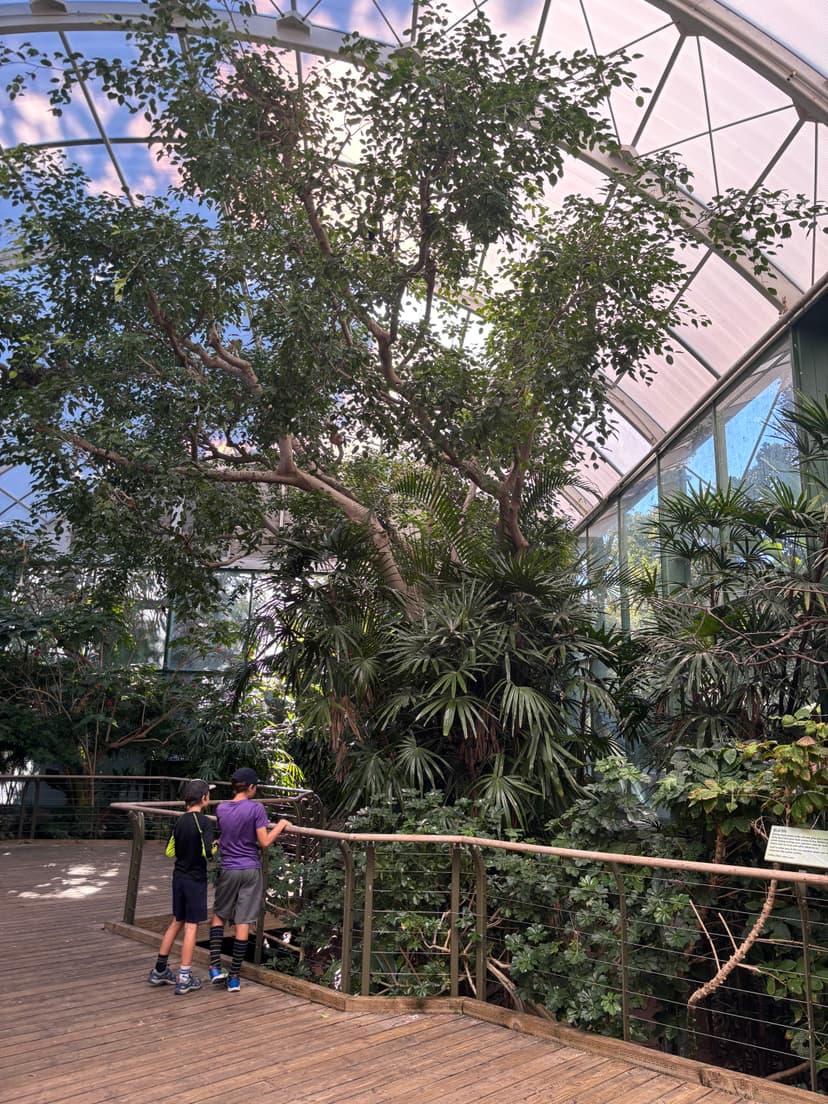
By days three and four, we knew our way around. We could map out our day based on where we wanted to linger. We visited the aviary we had somehow missed before and spent half an hour spotting bright tropical birds, soaking in the warmth and humidity of a rainforest. We finally made it to the cheetahs and walked around the lagoon. The park is so vast that even on our fourth visit, we were still discovering new corners.
By now, we know what we want to return to: the kangaroos and the platypus, the tram, the succulent garden. We know to look for the albino wallaby and the baby giraffe—now two weeks old, still somehow tiny compared to its family, even after growing another foot taller. On our first visit, we suspected there was a sand cat and hoped we might catch a glimpse. By our fourth visit, we know his name is Newman, that he weighs just seven pounds, and that he likes to sleep curled up on a pillow.
When we first started planning our RV travels, we imagined whisking around the country—seeing it all, checking off every state, maybe even every Canadian province. Instead, we chose to travel more slowly, giving ourselves time to truly live in each place rather than simply pass through.
Extended stays and revisiting our favorite places allow us to know them more deeply. We make friends. We learn the tides. We buy memberships to local zoos, museums, and aquariums.
There is beauty in seeing more. But there is magic in making a new place feel like home.